Moon Phase TodayMoon Calendar & Lunar Phases
English

Moon Phase Today | Lunar Calendar & Moonrise

Discover the exact Moon Phase Today with real-time illumination, lunar age, and precise moonrise and moonset times for any city worldwide. Plan your night stargazing with astronomical accuracy using the Moon Phase Today tool.

2026-10-09 (Fri)
Visual Magnitude -5.1
Angular Size 0° 31' 6"
Illumination 0.9%
Moon Age 28.6 days
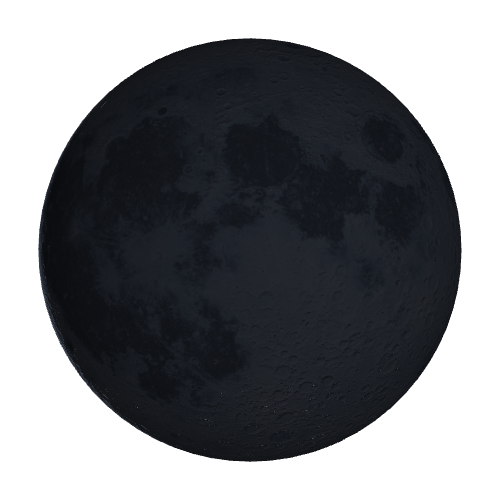
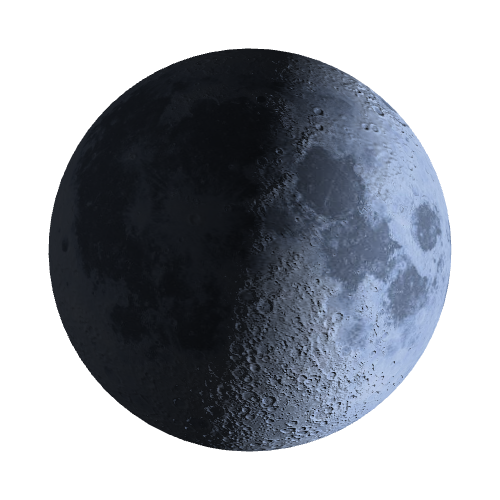
新月(朔)
🌑

New Moon

The eighth and final phase of the lunar cycle, positioned between Third Quarter and New Moon. As illumination wanes to a slender crescent, the Moon shines brightly in the eastern sky before dawn.

Moonrise Time 13:51
Moonrise Direction W (253.4°)
Moonset Time 01:28
Moonset Direction W (278°)
London · GMT
CELESTIAL OBSERVATION GUIDE

Tonight's Moon Observation Tips

Track direction, sky altitude, and ideal viewing windows for the Moon Phase Today.

North (N)
East (E)
South (S)
West (W)
🌑
W Sky (Azimuth 253.4° / Altitude 7.0°)

Sky orientation chart with North at the top. The Moon is currently visible in this direction.

Observation Advice for the Moon Phase Today

The eighth and final phase of the lunar cycle, positioned between Third Quarter and New Moon. As illumination wanes to a slender crescent, the Moon shines brightly in the eastern sky before dawn.

Atmospheric Conditions & Sky Transparency

Local cloud cover, moisture, and city light pollution directly influence your viewing clarity. Select an elevated, open area away from artificial lights for optimal contrast.

MONTHLY LUNAR CYCLE

2026 October Moon Phase Calendar

Follow daily phase changes from New Moon to Full Moon. Click any date to examine the Moon Phase Today and detailed celestial coordinates.

Sun
Mon
Tue
Wed
Thu
Fri
Sat
2026 ASTRONOMICAL LUNAR CALENDAR

2026 2026 Major Lunar Phases Schedule

Complete timetable of the four principal lunar phases in 2026: New Moon, First Quarter, Full Moon, and Third Quarter. Check the Moon Phase Today and plan your astronomical photography calendar.

January
Full Moon Day 3, 19:03
Last Qtr Day 10, 16:48
New Moon Day 18, 08:52
First Qtr Day 26, 14:48
February
Full Moon Day 2, 07:09
Last Qtr Day 9, 04:11
New Moon Day 17, 21:01
First Qtr Day 25, 02:28
March
Full Moon Day 3, 20:38
Last Qtr Day 10, 18:38
New Moon Day 19, 10:24
First Qtr Day 26, 13:46
April
Full Moon Day 2, 11:12
Last Qtr Day 9, 11:52
New Moon Day 17, 20:52
First Qtr Day 25, 00:32
May
Full Moon Day 2, 02:23
Last Qtr Day 9, 06:10
New Moon Day 17, 04:47
First Qtr Day 24, 10:14
Full Moon Day 31, 17:45
June
Last Qtr Day 8, 00:08
New Moon Day 15, 11:06
First Qtr Day 22, 19:43
Full Moon Day 30, 08:57
July
Last Qtr Day 7, 16:29
New Moon Day 14, 16:44
First Qtr Day 22, 05:14
Full Moon Day 29, 23:36
August
Last Qtr Day 6, 06:22
New Moon Day 12, 22:38
First Qtr Day 20, 15:27
Full Moon Day 28, 13:19
September
Last Qtr Day 4, 17:51
New Moon Day 11, 06:27
First Qtr Day 19, 02:44
Full Moon Day 27, 01:50
October
Last Qtr Day 4, 03:13
New Moon Day 10, 16:50
First Qtr Day 18, 15:32
Full Moon Day 26, 13:12
November
Last Qtr Day 2, 11:20
New Moon Day 9, 06:01
First Qtr Day 17, 05:47
Full Moon Day 24, 23:54
December
Last Qtr Day 1, 19:08
New Moon Day 8, 22:52
First Qtr Day 17, 21:43
Full Moon Day 24, 10:28
Last Qtr Day 31, 03:59
LUNAR PHASES KNOWLEDGE

Understanding the Moon Phase Today & Lunar Cycles

Observing the Moon Phase Today connects us with celestial mechanics in our solar system. The Moon Phase Today continuously transforms as our natural satellite orbits the Earth, reflecting varying angles of sunlight back toward terrestrial observers. From precise lunar age calculations and synodic periods to crater topography along the terminator, this guide explores everything you need to know about the Moon Phase Today.

1. What Governs the Moon Phase Today?

The Moon Phase Today is determined solely by the geometric relationship between the Sun, Earth, and Moon. Because the Moon does not emit its own visible light, observers on Earth can only see the portion illuminated by the Sun. As the Moon travels around Earth during its 29.53-day synodic month, the illuminated fraction changes smoothly through eight recognized phases: New Moon, Waxing Crescent, First Quarter, Waxing Gibbous, Full Moon, Waning Gibbous, Third Quarter, and Waning Crescent. Tracking the Moon Phase Today enables amateur stargazers and professional astrophotographers to schedule deep-sky imaging sessions during darker nights.
2. Lunar Age, Synodic Cycles, and True Orbital Motion

Lunar age represents the exact number of days that have passed since the most recent New Moon (day 0.0). When studying the Moon Phase Today, lunar age directly corresponds to its apparent shape and illumination fraction. Because the lunar orbit is elliptical rather than circular, the time required to progress from New Moon to Full Moon varies between 13.8 and 15.8 days, averaging 14.8 days. Evaluating the Moon Phase Today gives observers precise astronomical metrics including visual magnitude, distance from Earth in kilometers, and apparent angular diameter in arcminutes and arcseconds.

3. Moonrise, Moonset, and Changing Sky Coordinates

Anticipating the Moon Phase Today allows stargazers to determine exact rising and setting times. As the Moon orbits eastward at approximately 12 to 13 degrees per day, moonrise occurs roughly 50 minutes later each night. During New Moon, the Moon rises and sets in tandem with the Sun. A First Quarter moon rises near midday, reaches its highest altitude around sunset, and dips below the western horizon near midnight. Full Moon rises opposite sunset, illuminating the sky throughout the night. Checking the Moon Phase Today reveals its current azimuth and horizon elevation for your specific coordinates.

4. Observing Crater Relief Along the Lunar Terminator

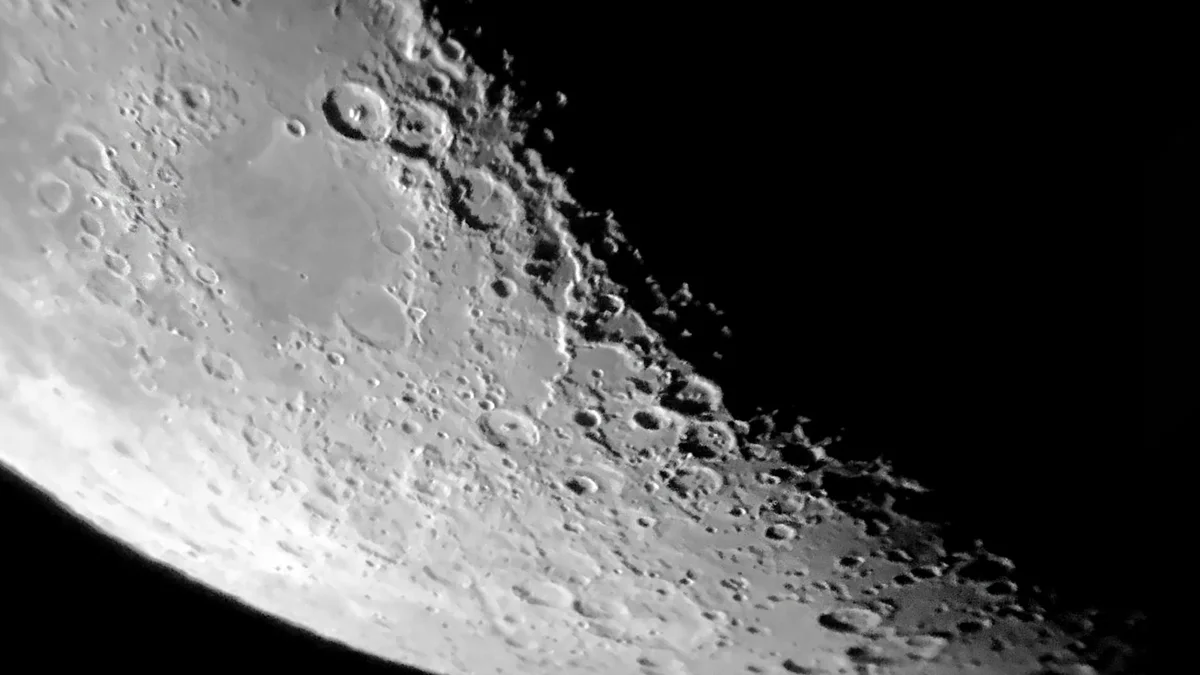
While many assume Full Moon is the optimal time for observation, seasoned astronomers recognize that the Moon Phase Today reveals the richest surface detail during partial phases. Along the terminator—the boundary line separating the lunar day from the lunar night—incoming sunlight strikes surface features at low, glancing angles. This creates long, dramatic shadows that accentuate the three-dimensional topography of crater rims, mountain ranges, and lava plains. Examining the Moon Phase Today through binoculars or a small telescope brings features like Tycho, Copernicus, and Montes Apenninus into sharp relief.